If you’ve recently opened your Google Ads dashboard and seen a campaign type called Performance Max, you might’ve thought: What exactly is this—and do I need it?
You’re not alone.
Performance Max (or PMax, as the pros call it) is Google’s most powerful campaign type to date. But it also feels like a black box if you’re not a Google Ads expert.
Let’s simplify it—no jargon, no fluff—just real insight into how it works, why it matters, and how to use it smartly.
So, What Is Performance Max?
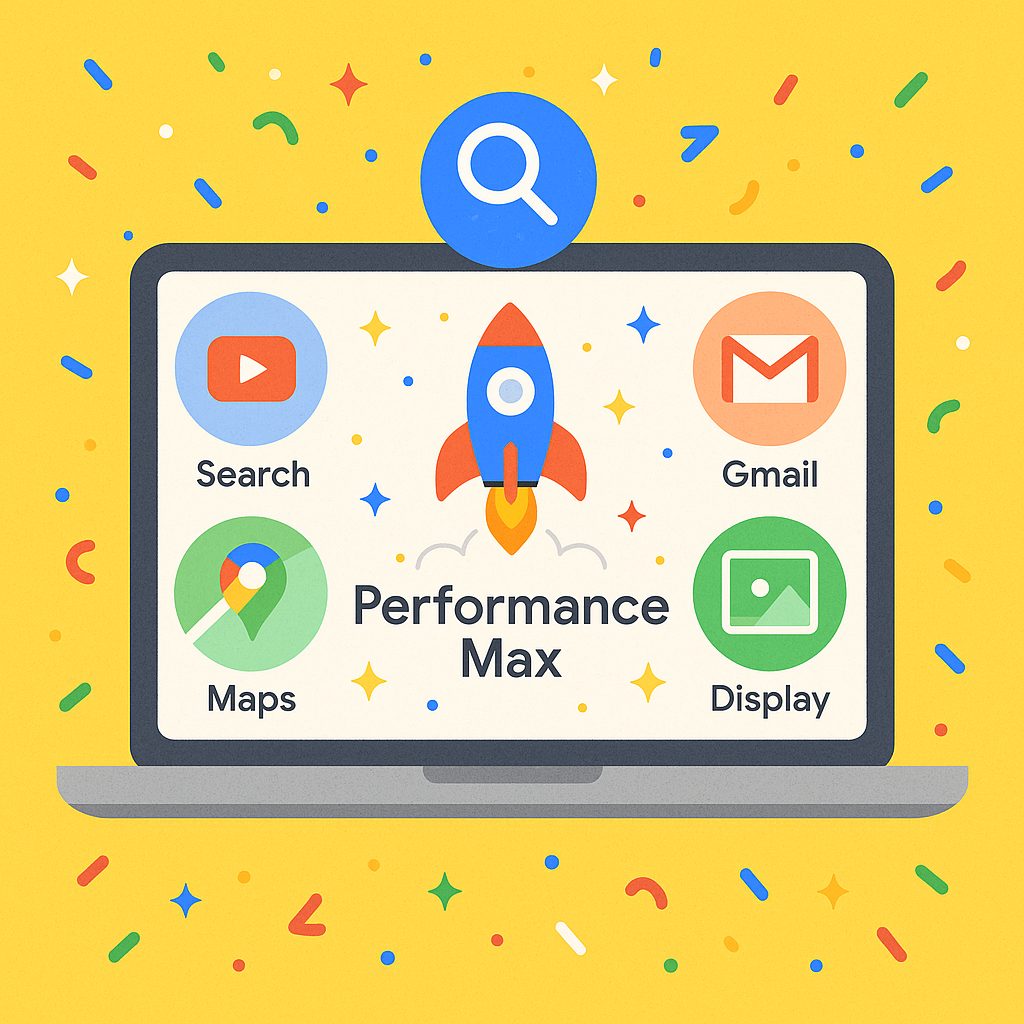
Performance Max is an all-in-one campaign type that allows Google to show your ads across every available channel, using automation and AI to do the heavy lifting.
That includes:
- Google Search
- Display Network
- YouTube
- Gmail
- Google Maps
- Google Discover
Instead of setting up separate campaigns for each platform, PMax combines them into one centralised campaign. You upload your content, tell Google your goal—and the algorithm handles the rest.
What Makes PMax Different (and Powerful)
-Goal-Driven
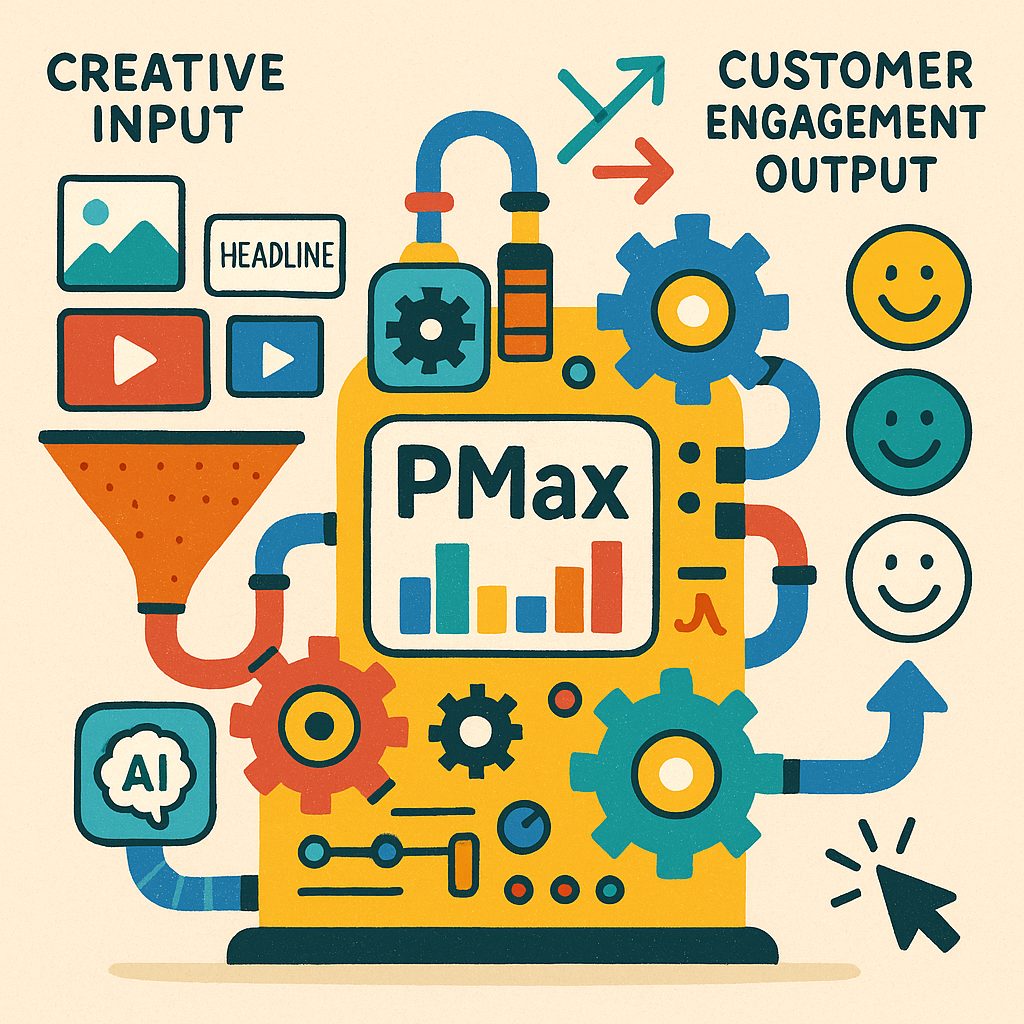
You choose your objective (like leads, sales, or store visits), and Google’s machine learning optimises to reach it.
-Multi-Channel Reach
Your ads appear everywhere potential customers are—even places you wouldn’t think to target.
-Smart Bidding + Budgeting
The system automatically shifts budget to the placements and audiences that convert best.
-Creative Mixing
Google tests different headlines, videos, and images in real-time to find the top performers.
-Audience Signals
You can guide the AI by telling it who your ideal customers are—based on past conversions or your own data.
Sounds Impressive… But What’s the Catch?
Here’s the thing: PMax gives up control for convenience.
It’s amazing at finding conversions—but less transparent about how it’s doing it. That means:
- You won’t always know which channels are driving the most value
- You can’t choose exact keywords like in Search campaigns
- Testing and optimisation happens behind the scenes
So while it works brilliantly for many businesses, it’s not for control freaks or ultra-niche targeting.
Should You Use Performance Max?
Performance Max is ideal if:
✔️ You want to simplify campaign management
✔️ Your goal is clear: more leads, sales, or phone calls
✔️ You already have strong creative assets (videos, headlines, images)
✔️ You want to appear on multiple platforms without managing each one individually
✔️ You’re okay with letting the algorithm experiment
But avoid it if:
🚫 You have a tiny budget (less data = less AI learning)
🚫 You need super-specific targeting (like very narrow keyword control)
🚫 You have no creative content to upload
“The best marketing doesn’t feel like marketing.”
– Tom Fishburne (The Marketoonist)
How to Set Up a Smart PMax Campaign (in Plain English)
- Set a Clear Goal
Start with one objective—like leads or website purchases. Don’t try to combine goals. - Upload High-Quality Creative
Google mixes and matches everything you upload. Include:- 5 Headlines
- 5 Descriptions
- Images (landscape & square)
- A short video (if possible)
- Add Audience Signals
Tell Google who your ideal customer is. Use:- Website visitors
- Email lists
- In-market audiences
- Let It Learn
Performance Max improves over time. Let it run for 2–4 weeks before making big changes. - Review the Insights Tab
You can’t see everything, but you can see trends, top-performing assets, and search themes.
Performance Max isn’t magic—but it is smart, efficient, and incredibly scalable when used right.
At Nimbler, we help clients get real results from PMax campaigns by blending creative strategy, sharp data, and the right setup. You don’t need to understand every setting—you just need a team that does.
Ready to embrace change and unlock the full potential of your marketing strategy? Then book a Discovery Call with our Founder, Lead Strategist and author of this article, Jeffrey de Visser.

Jeffrey de Visser is Nimbler’s Founder, Managing Director and Lead Strategist. Visit his LinkedIn profile to find out more.