
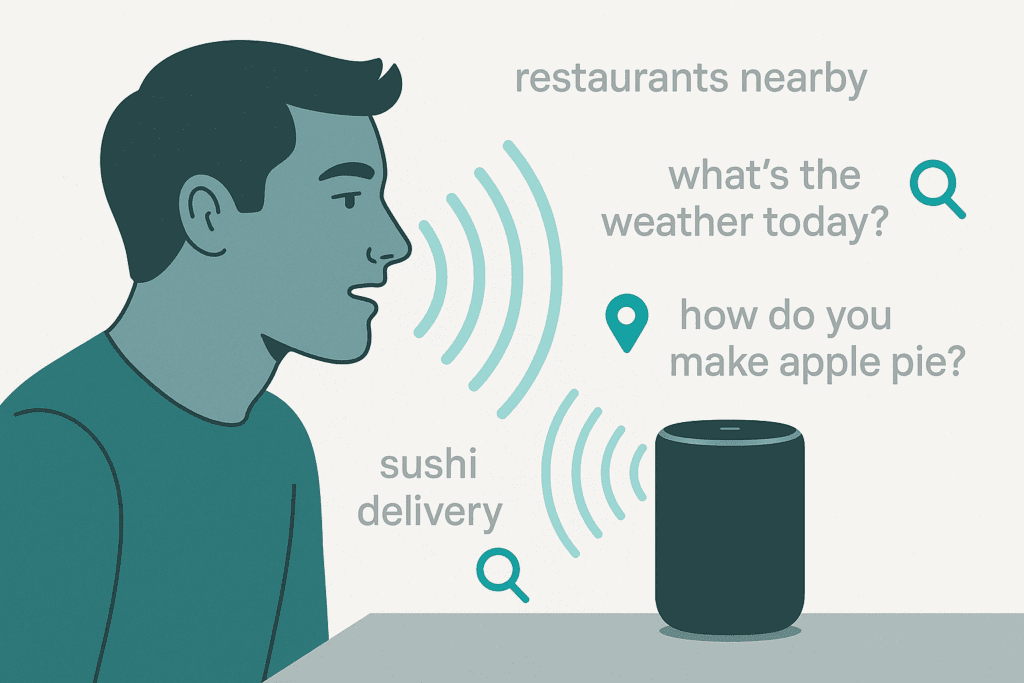
By 2025, over 50% of internet users are expected to engage with voice search daily. Smart speakers, voice assistants, and in-car search have fundamentally changed how people query information. The big shift? Voice searches are more conversational, immediate, and location-based.
This transformation is driven by the rise of smart assistants like Siri, Alexa, Google Assistant, and emerging tools like ChatGPT voice search integrations. From asking for weather updates to finding the nearest vegan sushi spot, users are relying on voice for quick, hands-free interactions.
If your SEO strategy is still focused only on typed keywords, you’re missing a massive opportunity to stay relevant and accessible.
How Voice Search Is Different:
- Natural Language: Queries are longer and phrased like questions (“What’s the best vegan restaurant near me?”).
- Local Intent: Many searches are action-oriented and proximity-based (“hairdresser open now”).
- Featured Snippets Dominate: The top voice search result often comes from Google’s Position Zero.
- Context-Aware: Voice assistants use location, device, and prior behavior to personalize results.
Optimizing for Voice Search:
- Use Conversational Phrases: Target long-tail keywords and question-based queries.
- Add FAQ Sections: Structured Q&A formats increase chances of getting picked for snippets.
- Improve Page Speed: Fast, mobile-optimized pages get priority.
- Focus on Local SEO: Keep your Google Business Profile updated with relevant keywords.
- Use Structured Data (Schema): Help search engines understand your content’s intent.
Tools to Help:
- AnswerThePublic: Find common voice-style queries.
- SurferSEO: Optimize content for semantic relevance.
- Whitespark: Track and improve local search rankings.
- Schema.org Markup Generators: Add FAQ, business, and product schemas.
Emerging Trends:
- Voice Commerce: More people are shopping via voice assistants—optimize product pages accordingly.
- Multilingual Search: Voice search in local languages is rising in emerging markets.
- Voice Ads: Brands are testing interactive, spoken ads via Alexa and Google Home.
- Screenless Navigation: Smart glasses and watches are introducing audio-first search use cases.
Voice Optimization Checklist:
Long-tail keywords in natural question form
Mobile site loads in <3 seconds
Google Business Profile fully optimized
FAQ schema installed on key pages
Local keywords used in meta titles and H1s
"Voice search isn’t the future—it’s already how the future is searching."
— Purna Virji
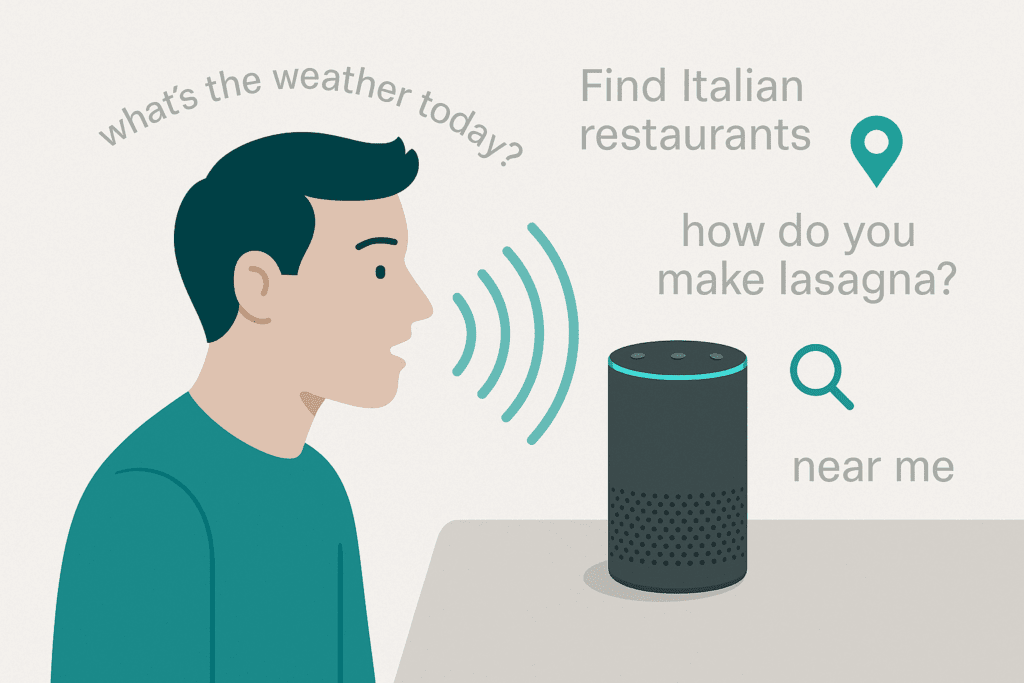
Voice search isn’t just a convenience—it’s the next frontier in SEO. As more users lean into hands-free, instant answers, your business must be the one Alexa or Google chooses to speak on your behalf.
Those who adapt now will win early in a space that’s growing faster than any other search format.
Ready to embrace change and unlock the full potential of your marketing strategy? Then book a Discovery Call with our Founder, Lead Strategist and author of this article, Jeffrey de Visser.

Jeffrey de Visser is Nimbler’s Founder, Managing Director and Lead Strategist. Visit his LinkedIn profile to find out more.